Water Softener Installation in Aliso Viejo, CA: Hardness, Salt, RO and Whole-House Filters
When a plumber comes out to look at the water, the first thing to establish is whether hard water is the problem. Scale on a showerhead, spots on glass and a water heater that fills with sediment all suggest it, but a measured value settles it. A softener, a filter and a reverse osmosis tap each solve a different problem, and buying one for another's job is the common mistake.
This page covers what the water here is, which district's water you have, what each system does, and what to ask about sizing, salt and service before one is installed.
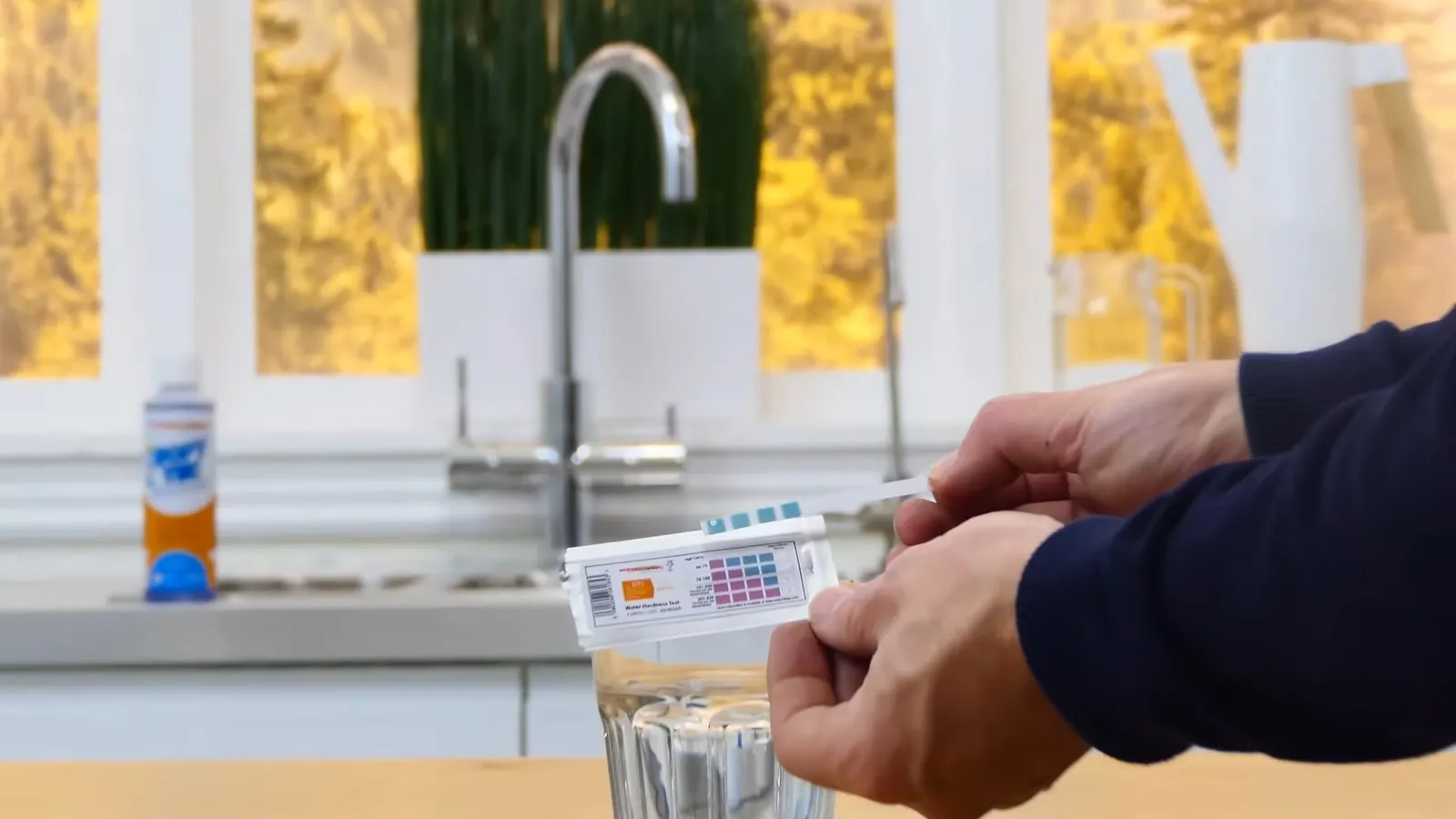
Hard water signs and testing: is it hard enough to matter?
Moulton Niguel imports all of its drinking water from the Metropolitan Water District, a mix of Colorado River and State Water Project supply, and in its 2023 report the average comes to 13.3 grains per gallon of hardness. That is hard water, and scale is the visible result: white crust on faucets and showerheads, spots on dishes, a film in the tub and sediment in the water heater.
- Scale on fixtures. A crust that vinegar dissolves is calcium.
- Sediment in the water heater. It is the reason for popping noises and shorter life.
- Spotting on glass and dishes. Hard water leaves mineral residue as it dries.
- Dry skin and stiff laundry. These are often blamed on hard water; a test shows whether it is the cause.
Test the water at your own tap before sizing anything. A plumber can do it with a test kit, and the number tells you whether the average for your district matches what comes out of your faucet. No value was found for the El Toro Water District area, so your water bill is what names the district that serves you.
Source for supply and hardness
MNWD's operations pages and its 2023 Consumer Confidence Report describe the supply and give the average.
Figures drawn from MNWD's 2023 report and its operations pages; checked October 2026.
Call the dispatch line: (949) 209-5456
Softener work involves the main water line and often a drain and a power connection. Close the main valve before anything is disconnected, and leave electrical wiring to an electrician.
Water treatment: softener, filter or both
Hard water solutions are different tools for different jobs. A softener removes the hardness minerals, calcium and magnesium, by ion exchange, and it needs salt to refresh itself. A filter removes particles and some tastes and odors, and does nothing for hardness. Reverse osmosis forces water through a membrane that removes dissolved solids, and it usually serves one tap. Whole-house treatment means the system treats everything that enters the house, and under-sink treatment treats one fixture.
| System | What it does | What it does not do |
|---|---|---|
| Water softener | Removes hardness minerals that cause scale | Filter particles or remove all dissolved solids |
| Whole-house filter | Removes sediment and, with carbon, some taste and odor | Soften the water |
| Reverse osmosis | Removes dissolved solids at one tap | Treat the whole house; it also wastes some water |
| Under-sink filter | Improves drinking water at one tap | Prevent scale in the heater or on fixtures |
A softener is the answer to scale, and it protects the water heater and fixtures the scale in a tank heater page describes. If the complaint is about taste or particles, a filter is the answer, and a softener will not help.
Softener installation: sizing, location and the connections
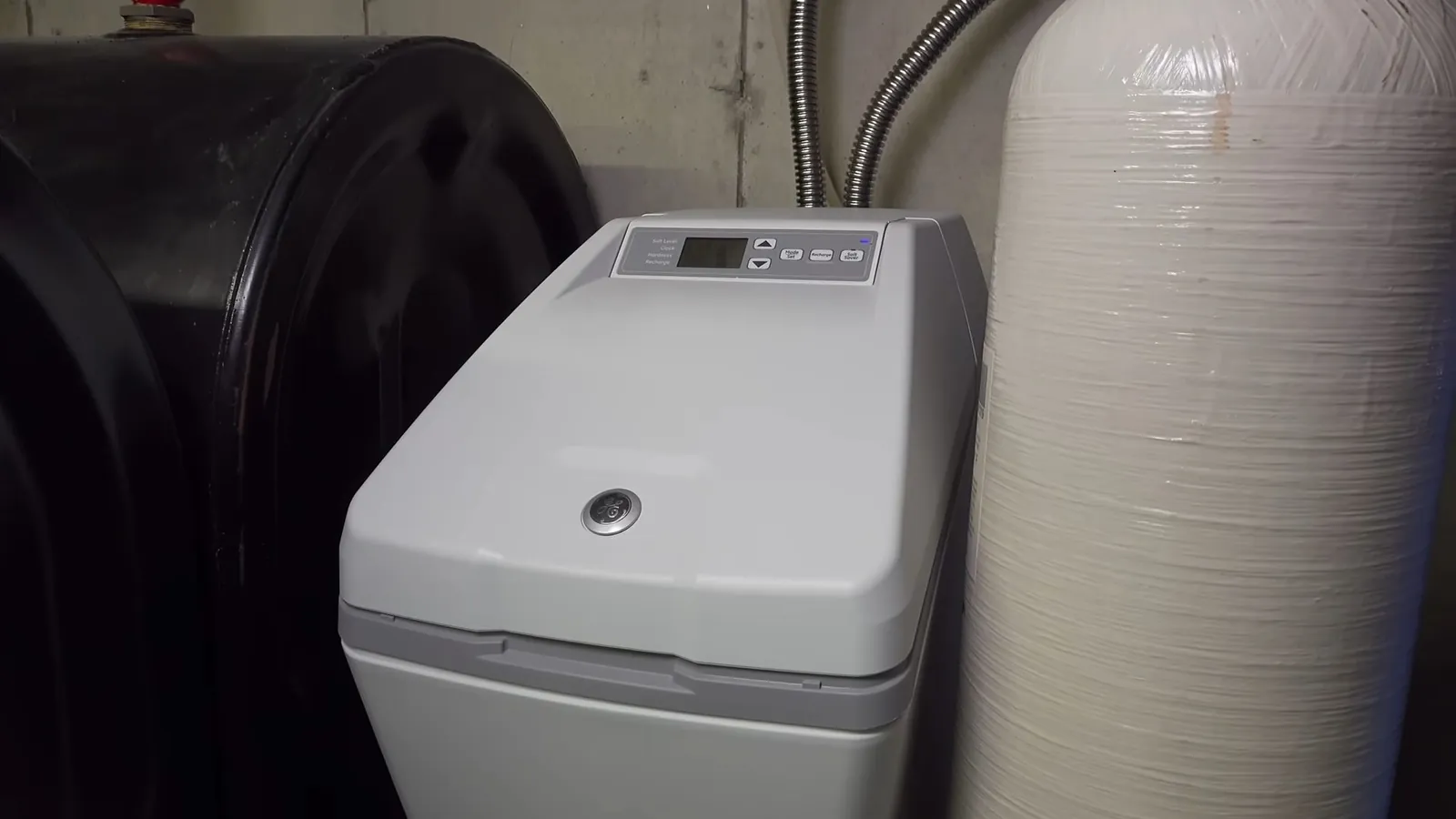
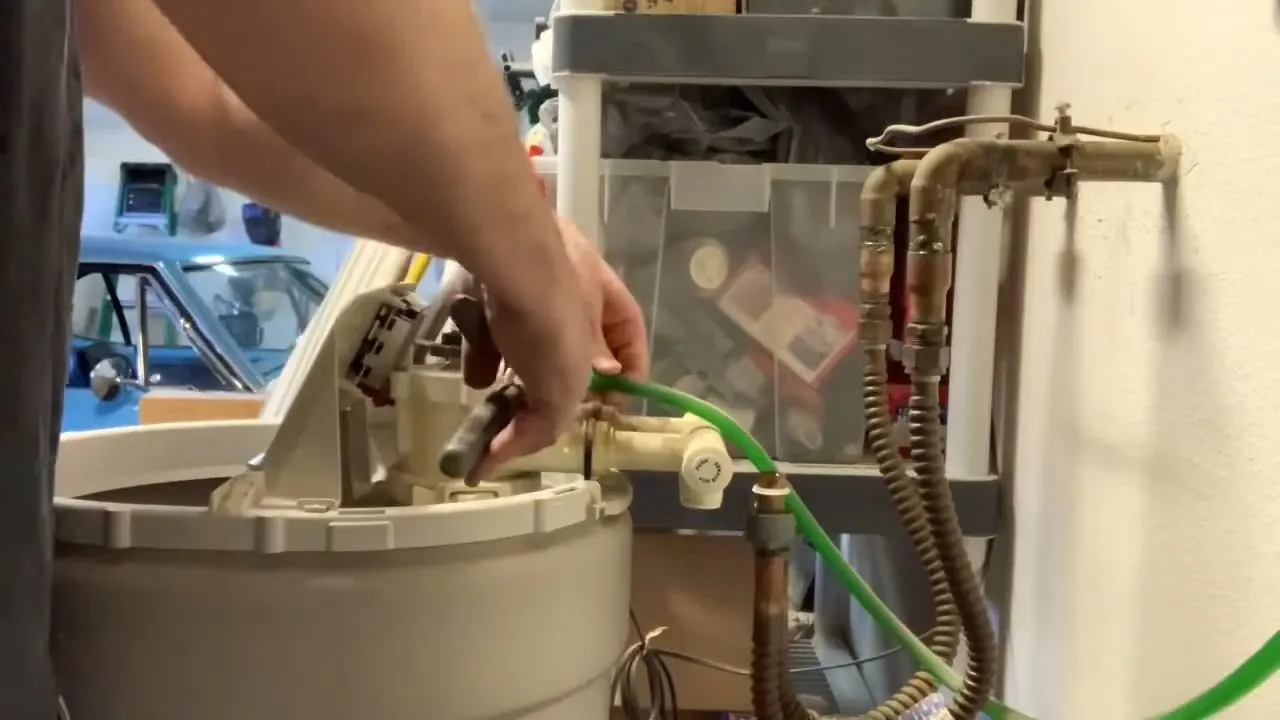
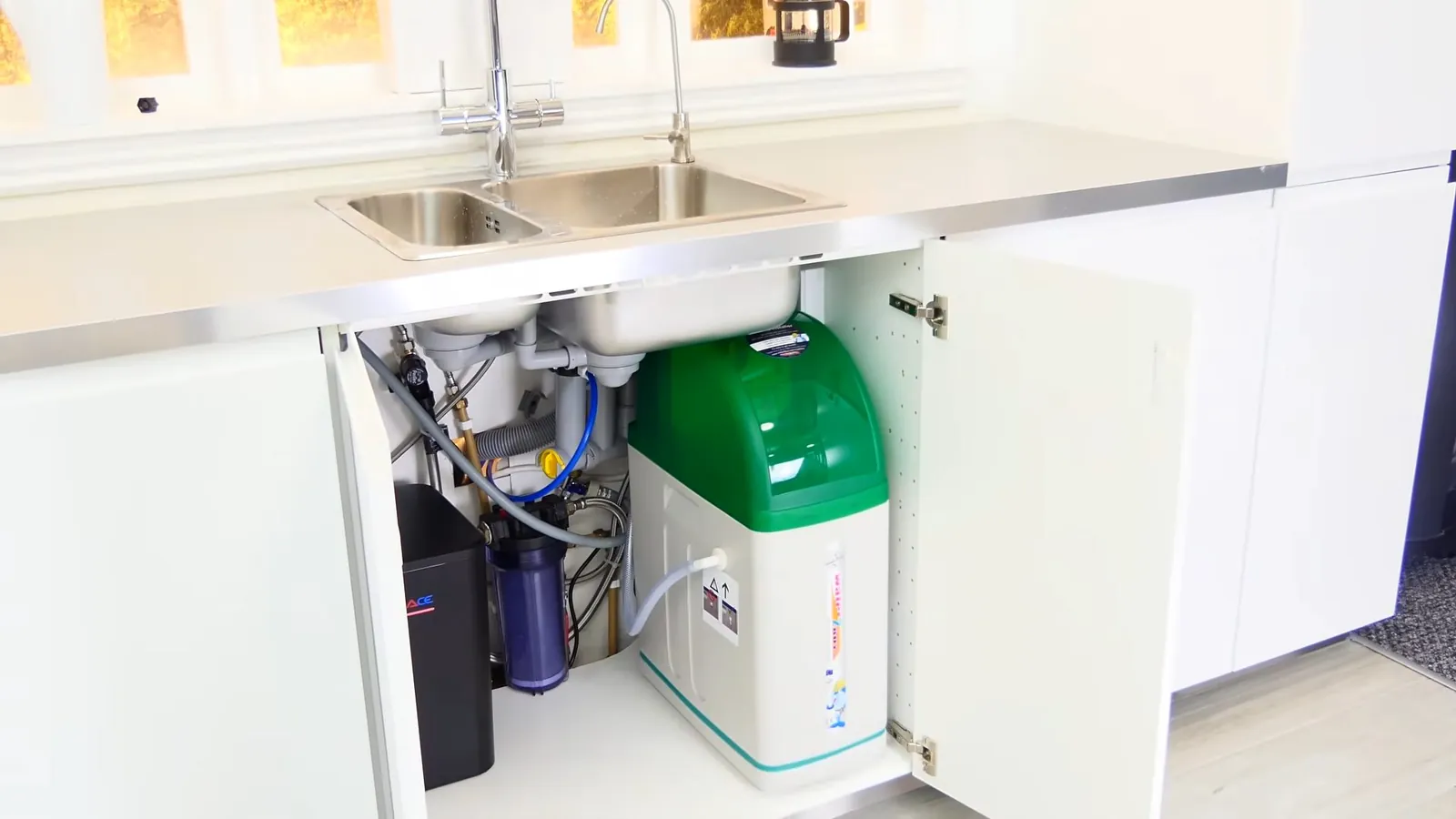
Installing a water softener is a plumbing job with four parts. The unit is placed on a level surface near the main water line, usually in a garage or utility area. It is connected to the supply with a bypass valve, so that water can be routed around it for service. The drain line for the regeneration cycle has to run to an approved location, and the unit needs a power outlet.
- Sizing: based on household size and the measured hardness, not a guess. Ask to see the calculation.
- Location: space for the unit and a salt tank, and access to refill salt.
- Drain: where the regeneration water goes and how it is routed.
- Bypass: a valve to isolate the system.
- Outdoor spigots: whether they should receive softened water.
Ask who pulls the permit, if one is needed, and whether the quote names the model, the capacity and the connections. The Contractors State License Board lists water conditioning equipment under the C-36 plumbing classification, so a plumbing contractor can install one.
Softener replacement, repair and service
Softeners wear. The common failures are a control valve that will not cycle, a resin bed that has exhausted its capacity, a brine tank that clogs with a salt bridge and a unit that overflows. A softener that has stopped softening, so that the water is hard again, needs the control, the resin or the brine system checked. Replacement makes sense when the unit is old, repairs are frequent or the resin is spent.
A caller whose fridge line valve had been replaced wondered whether the softener overflowing was connected, which is possible when the two share a drain or a supply. A plumber can check the connections and the drain before blaming the unit.
Salt, brine and regeneration
A softener holds resin beads that trap hardness minerals. When the beads are full, the unit regenerates by flushing them with brine, which is salt dissolved in water, and the brine and the captured minerals go to the drain. That is why a softener needs salt added, why it uses some water and why the drain connection matters. Check the salt level once a month.
Whole-house filtration
A whole-house filter sits on the main line and treats all the water that enters the house. A sediment filter catches sand and rust, and a carbon filter reduces chlorine taste and odor. Filters need new cartridges on a schedule, and a filter that is not changed can restrict flow. Ask what the cartridge schedule is and who supplies them. The filter sits after the main valve, and ahead of a softener if there is one, so that sediment never reaches the resin. A bypass, and pressure gauges before and after the housing, show when a cartridge is clogged, since a growing pressure drop means it is time to change it. Ask for the cartridge's micron rating and the model's flow rate, because a filter that is too small for the house slows every tap.
Reverse osmosis systems
A reverse osmosis system is installed under a sink and delivers filtered water to a separate faucet. It removes dissolved solids that other filters do not, and it sends a stream of wastewater to the drain. Ask where the unit will sit, how often the filters and membrane are replaced, and what the system does to water pressure at the tap. An RO tap delivers slowly, so most systems include a small storage tank and a separate faucet, and a system can also feed an ice maker or refrigerator line. Ask how much drain water is sent down for each gallon produced, what the filter stages are and how the drain connection is made.
Under-sink and drinking water filters
A single under-sink filter, or a sediment water filter, is the simplest of these. It treats one tap, and the replacement cartridges are the ongoing task. If a filter has stopped delivering good flow or the water tastes off, replacing the cartridge is the first fix. Under-sink filters come as sediment cartridges that catch sand and rust, carbon cartridges that improve taste and odor, and combination units, connected through a small valve to the cold supply. Ask what each cartridge removes, how often it is changed and where replacements come from. A leaking housing is the common fault, and the housing seal and the connections are what a plumber checks first.
Water softener questions
Do I need a water softener or a water filter?
A softener is for hardness and the scale it leaves, and a filter is for particles, taste and odor. Moulton Niguel's 2023 average is 13.3 grains per gallon. A test at your tap shows whether hardness is the problem.
The softener overflowed after a fridge water line valve was replaced. Are they connected?
They can be if they share a supply or a drain. A plumber checks the connections and the softener's drain and bypass before assuming the unit has failed.
How do I know if my water is hard?
Scale on faucets, spots on glass, soap that does not lather and sediment in the water heater are signs. A hardness test at your tap gives a number, and your water bill names the district that supplies it.
How often does a water softener need salt?
It depends on the size of the unit and how much water the household uses, and a monthly check of the salt level is a sensible habit. The softener regenerates on its own, drawing on the salt.
Scale, spotting or a softener that has stopped working?
Call the dispatch line and say what you see and whether you have a system already. The call is routed to a plumber serving Aliso Viejo.
Call (949) 209-5456