Emergency Slab Leak Detection in Aliso Viejo, CA: Warm Floors, Running-Water Sounds and Repair Choices
A suspected slab leak forces a decision early: repair it now, or watch it and risk more water under the house. The right answer depends on what the leak is, where it is and how much of the floor has to come up to reach it.
This page works through that decision in order. First, whether it is a slab leak at all. Then how a plumber confirms and locates it, what the repair choices are, and what to ask before anyone cuts concrete.
Slab leak symptoms: what a slab leak looks like, and what else it could be
Callers describe the same handful of signs: a warm spot on a tile or wood floor, the sound of running water at night when everything is off, a water bill that jumped for no clear reason, or damp carpet along a wall. Each one has other possible causes, so the signs are a reason to test, not a diagnosis.
- A warm patch on the floor can come from a hot-water line under the slab, but a sun-heated window or a heating duct can do the same.
- Running water heard with everything off means water is moving somewhere. A running toilet is the usual cause, so check those first.
- A bill that rises with no change in use points to a leak of any kind, not necessarily one under the slab.
- Damp flooring along a wall can be a slab leak, a wall leak, a window or a drainage problem outside.
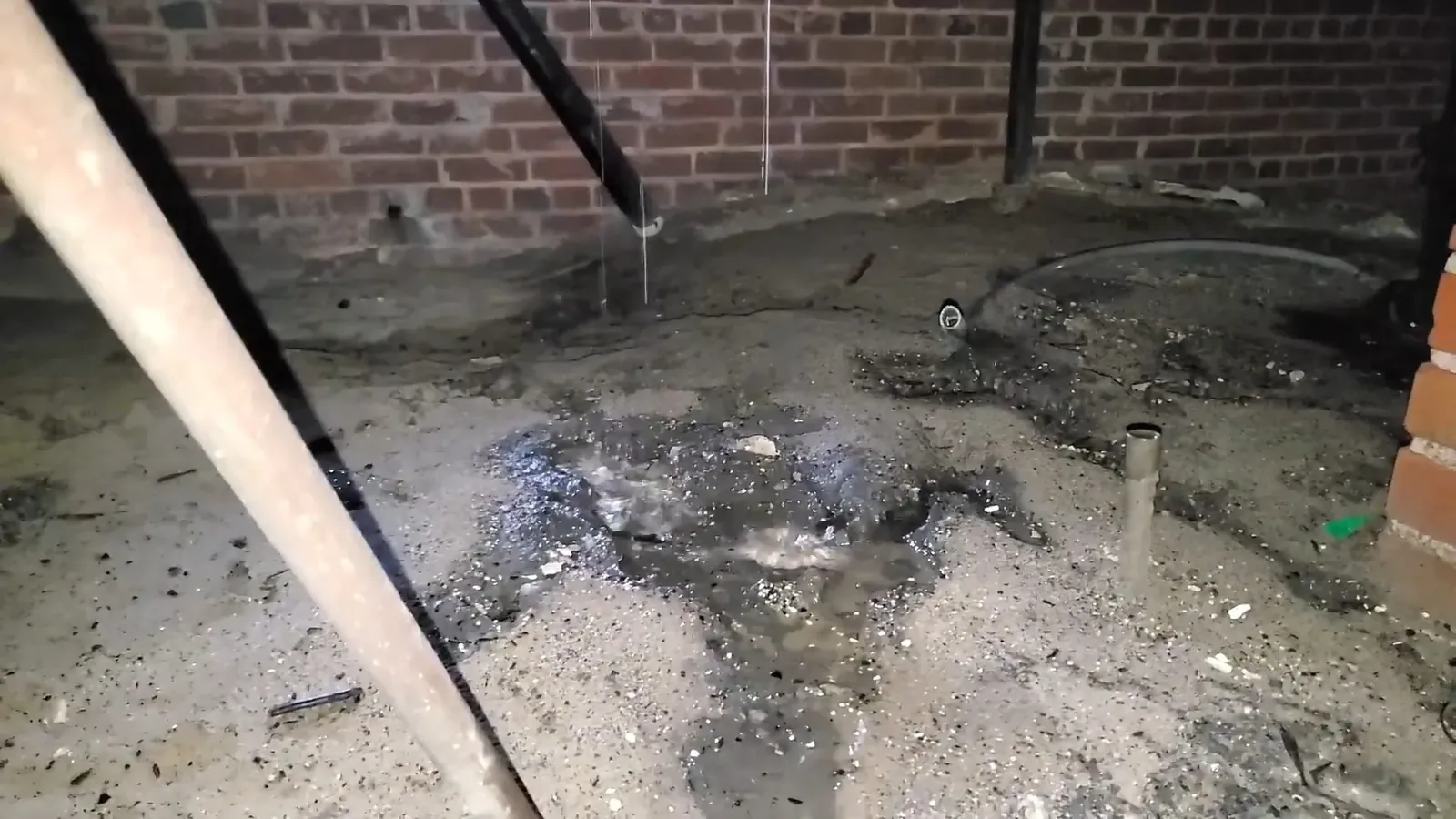
- Water at the edge of the slab, as one caller described in a garage, can come from a line under the slab or from the outside.
The first test is the same for all of them: the meter. The leak detection and meter test page walks through it. A meter that moves with everything off confirms that water is escaping; a plumber then decides whether it is under the slab.
Slab leak detection: confirm it, then locate it before anything is opened
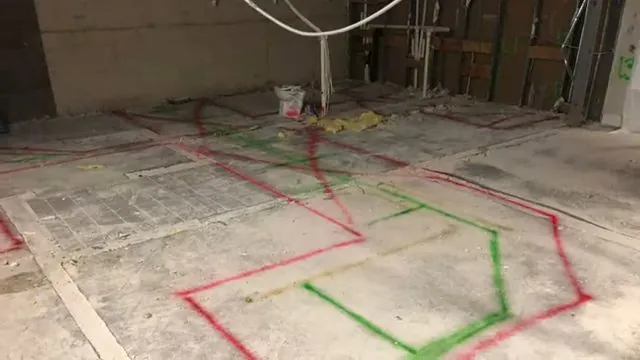
A plumber does not need to open the floor to find a slab leak. Acoustic and electronic listening equipment picks up the sound of pressurized water escaping, and the plumber marks the spot on the floor. Pressure tests on isolated sections of line show which run is losing water, and thermal tools can help when the leak is on the hot side.
Whose line it is matters before any work is approved. The water district maintains the line through the meter and its outlet coupling, and the homeowner owns everything after the coupling, according to Moulton Niguel Water District. A leak in the yard before the coupling is the district's to fix, and a leak under the slab is on the owner's side. For El Toro Water District customers the boundary may differ, so ask the district.
Slab leak repair: spot repair, reroute or replacement
The benefits of repairing a slab leak promptly are that the water stops soaking the ground and flooring beneath the house and the bill stops climbing. Once a leak is located, there are three broad ways to deal with it. Which one fits depends on how many leaks the line has had, what the pipe is made of and how much of the floor is finished.
| Option | What it involves | Tends to fit when | Ask about |
|---|---|---|---|
| Spot repair | Open the slab or tunnel beneath it at the leak and replace the damaged section | One leak in otherwise sound pipe | How much concrete and flooring comes up, and who patches it |
| Reroute | Abandon the line under the slab and run a new one through walls or the attic | The same run has leaked before, or access to it is poor | The route, what is opened for it and what the old line is left as |
| Replacement | Replace the supply lines that serve the house | Leaks keep appearing in different places | The scope in writing; see the whole-house repiping page |
Lining or epoxy methods coat the inside of a pipe instead of replacing it. Whether either suits a given line depends on the pipe and its condition, so ask the plumber why a method fits your line and not lines in general.
Concrete, flooring and what the repair does to the house
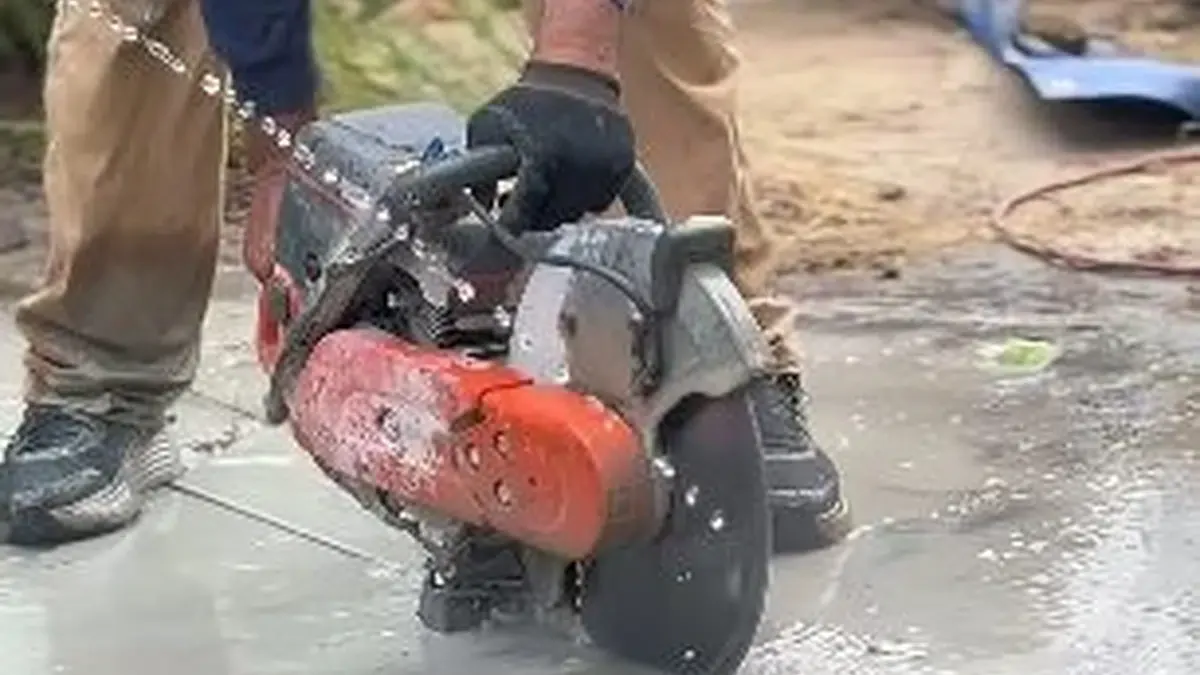
Slab work is as much about the floor as the pipe. A spot repair means breaking concrete, and anything laid over it, tile, wood or carpet, is affected. A reroute opens walls instead. Neither is automatically better: the right choice is the one whose damage you have agreed to in writing.
Two things are worth asking before any approval. First, who pulls the permit. Work that begins before one is issued is charged double under the city's published plumbing fees, so ask for the permit number in writing. Second, whether the repair involves digging outside the house, which calls for a DigAlert notice ahead of time. Ask whether it has been made.
Source for the permit and dig-notice points
The fee schedule and the dig-notice instruction are both published by the city's Building and Safety division.
From City of Aliso Viejo Building and Safety: applications and handouts and the FY 2026-27 fee schedule. Checked October 2026.
Questions to ask before you approve the repair
- Where exactly is the leak, shown as a measurement or a mark on the floor?
- Is it one leak or a pattern, and what is the line made of where it failed?
- Spot repair, reroute or replacement, and why that one for this house?
- What gets opened, and who repairs the concrete, flooring and paint afterward?
- Who is pulling the permit, and what is the permit number?
- Will the plumber put the location, the finding and the scope in writing?
Insurance is a separate conversation. Whether a policy responds to a slab leak, or only to the damage it causes, depends on the policy. Ask your insurer before work starts, and keep the plumber's written location report and photos of any damage.
A gas smell near the floor or any electrical equipment that has gotten wet is not a plumbing step. Leave the area and call Southern California Gas Company or 911 for gas, and stay clear of wet electrical equipment. Flooring that has already soaked is the subject of the water damage and drying page.
Slab work is one part of the plumbing in a house. The full service list on the homepage shows where the rest is covered.
Slab leak questions
What should I do if I think I have a slab leak right now?
Run the meter test with everything off. If the meter moves, close the main house valve to stop the water while you arrange a plumber, and keep people and power away from any wet area. A plumber can locate the leak without opening the floor, so there is no reason to start digging yourself.
How do I know if I have a slab leak?
The signs are a warm spot on the floor, running water heard with everything off, a bill that rises for no reason and damp flooring. None is proof by itself. A moving meter with everything off confirms a leak, and a plumber then decides whether it is under the slab.
When is a slab leak a repair and when is it a bigger job?
A single leak in an otherwise healthy line is usually a spot repair. A line that has leaked before, or leaks in several places, moves the conversation toward a reroute or replacement. Ask the plumber to explain why the option fits, and get the scope in writing.
Can a slab leak be found without breaking the floor?
Yes. Listening equipment and pressure tests locate most leaks and mark the spot on the surface, so concrete is opened only at the leak or not at all if the line is rerouted.
Think the leak is under the floor?
Call the dispatch line and describe the warm spot, the sound or the meter reading. The call is routed to a plumber serving Aliso Viejo.
Call (949) 209-5456