Water Line Repair in Aliso Viejo, CA: Yard Leaks, Low Pressure and the Meter Boundary
The water line is the pipe that carries water from the meter to the house, and it is the one pipe most owners have never seen. When it fails, the signs show up elsewhere: a wet patch in the yard, a bill that climbs, pressure that drops, or no water at all.
The sections below cover who owns the line and who repairs it, how a failing service line shows itself, how repair and replacement differ, and what pressure regulators and shutoff valves have to do with it.
Whose line is it? The meter coupling decides
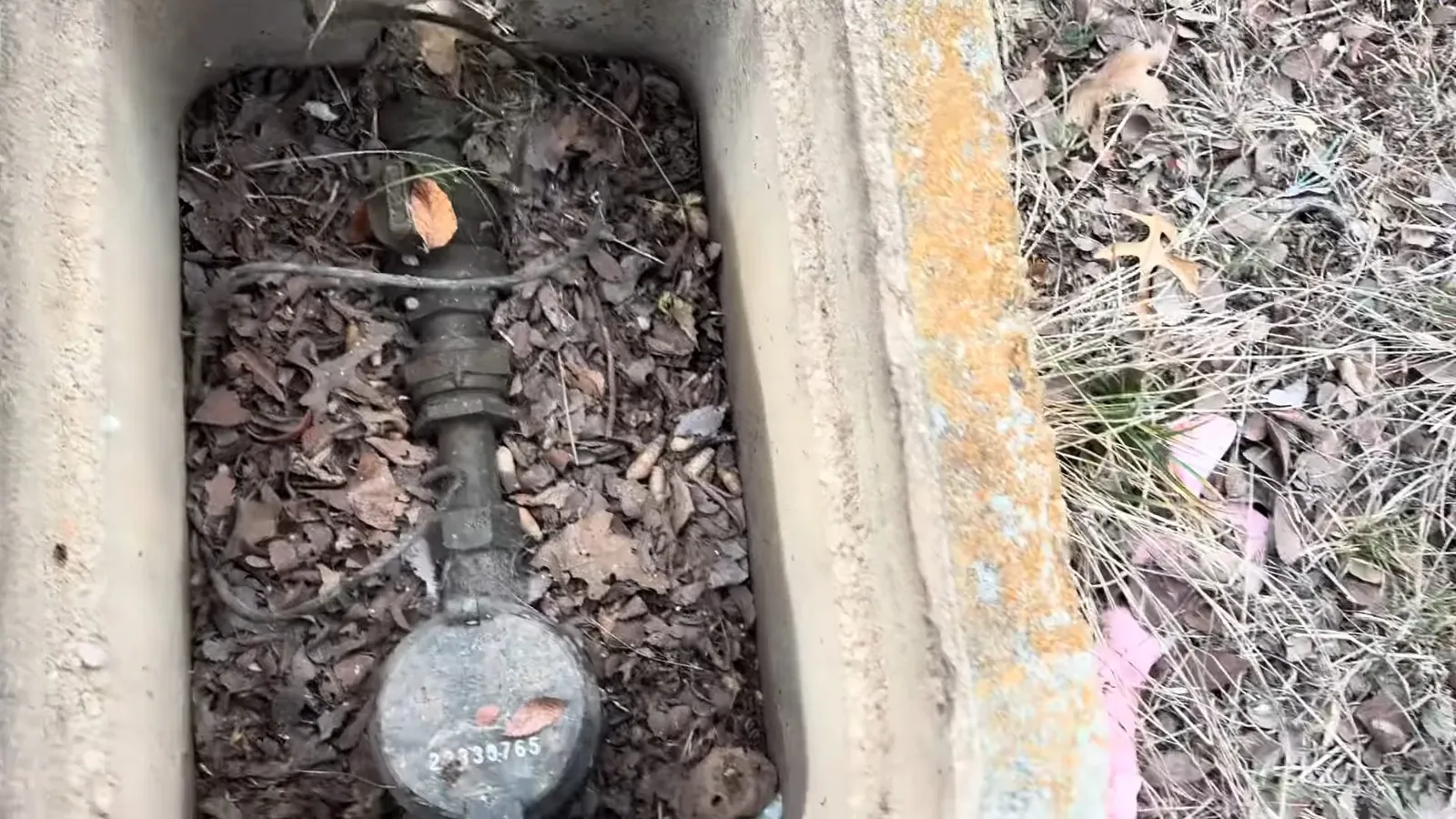
According to Moulton Niguel Water District, its responsibility runs from the main through the meter and the coupling at the meter's outlet. Everything past that coupling belongs to the homeowner: the line to the house, the house valve, and any irrigation or pool branch. That is where a repair bill changes hands, and it is why the first question about a wet yard is which side of the coupling the wet spot is on.
| Part of the line | Who maintains it |
|---|---|
| Main in the street, tap and the line to the meter | The water district |
| The meter and its outlet coupling | The water district |
| The line from the coupling to the house | The homeowner |
| House shutoff valve and irrigation or pool branches | The homeowner |
Aliso Viejo has two water districts, and this boundary is Moulton Niguel's. A bill from El Toro Water District means that district's own rules apply, and they are not summarized here.
Source for the boundary
Moulton Niguel's leak page describes the meter, the coupling and what lies on each side.
From MNWD's Fix a Leak page. Checked October 2026.
The valve at the meter box, often called the curb stop, is the landmark to ask about. Who repairs the water line from the curb stop to the house follows the same meter-coupling rule: the water district handles its side, and the owner arranges a plumber for the rest. For other work, the homepage service list shows what a plumber covers.
No one should dig near a buried line without a DigAlert notice, a homeowner included. A shovel through a gas or electric line is a far bigger problem than a water leak.
Service line and yard line leaks: how a failing line shows itself
A leak in a buried line seldom looks like a burst pipe. It looks like a patch of lawn that stays green or soggy when nothing is watering it, a damp spot along the line's path, the sound of water at the meter, or a bill that drifts upward without any change in use. Callers describe the same thing in different words: they know water is escaping and want someone with the equipment to find where.
The meter test separates a yard leak from an inside one: with everything off, a meter that moves while the house valve is closed points to the line between the meter and the house. The full routine is on the page on finding a hidden leak. A plumber then locates the line with listening equipment before anything is dug.
Water line repair: when a spot repair is enough
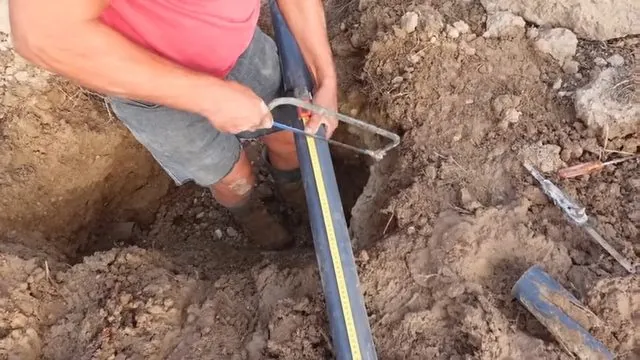
One failure in a line that is otherwise sound is a spot repair: the plumber exposes the line at the leak, cuts out the damaged section and splices in new pipe. The excavation is short, and the yard is restored afterward. The condition of the pipe on both sides of the cut decides whether the repair is likely to hold.
Ask what the exposed pipe was made of and how it looked. A line that is corroded, pitted or kinked is telling you that the next failure is not far off, and a spot repair then becomes a decision to postpone a replacement. A leak found early, before the water has washed out the ground around the line, also keeps the excavation small, which is a good reason to act on a meter reading instead of waiting.
Water line replacement: trench, trenchless and the dig notice
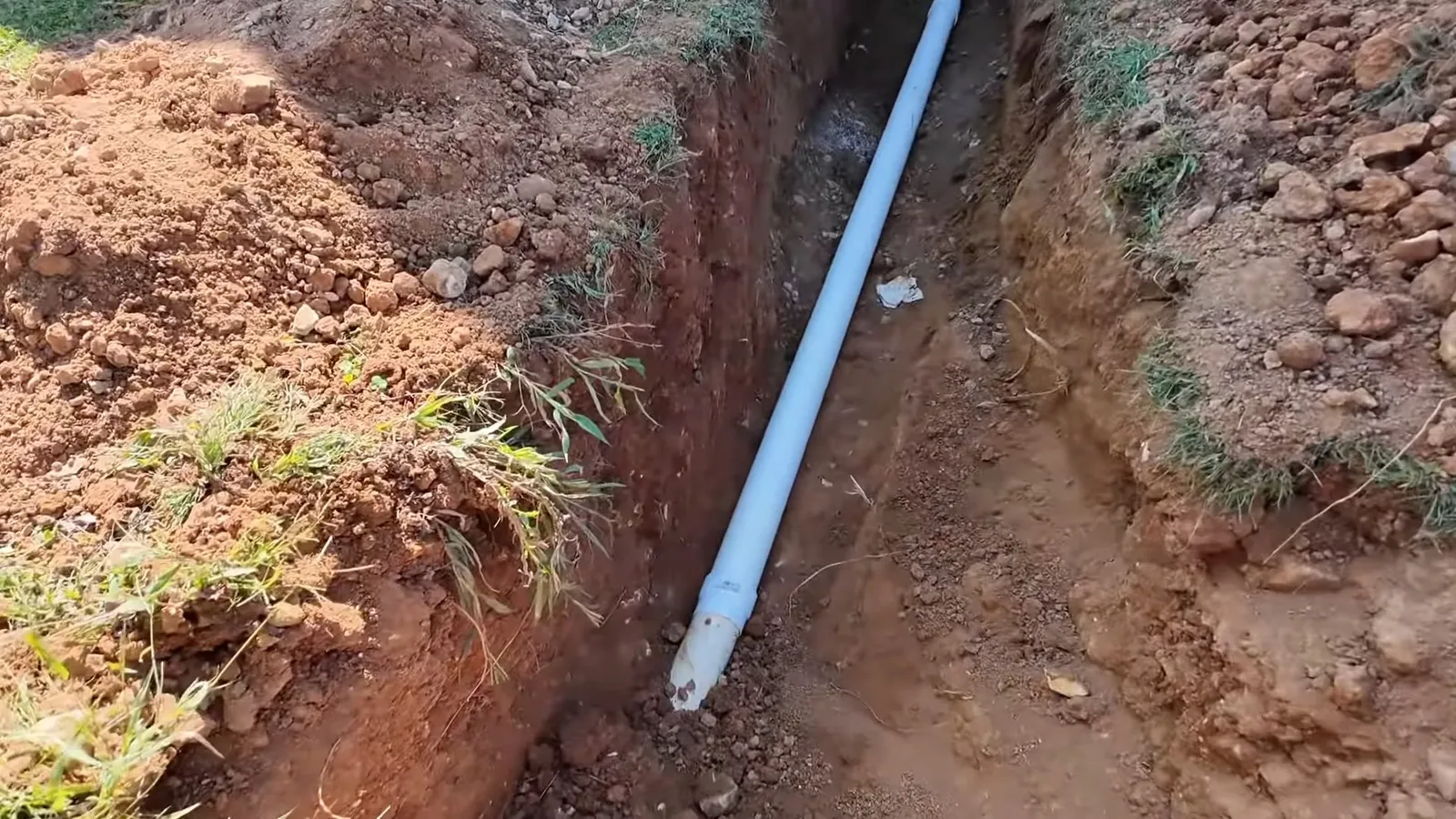
Replacement means a new pipe running from the coupling at the meter to the house. Two methods are common. An open trench exposes the whole path, which makes it direct and visible, but it removes whatever lies above the line. A trenchless method pulls a new line through the path from small access holes, which disturbs less of the yard and the driveway.
A new water line installation, for an extension or an abandoned old line, follows the same choices. Which fits depends on the route, on what lies above it and on the ground. Ask why the plumber chose the method, and how the quote handles the restoration afterward. The City of Aliso Viejo's handout tells contractors to notify DigAlert two working days before excavating, so also ask whether that has happened; the notice exists so that buried utilities are marked before anyone digs.
Source for the dig notice
DigAlert's two-working-day lead time appears in the city's pool and spa handout, which gives it as an instruction to contractors.
Instruction to contractors, found through the city's applications and handouts. Checked October 2026.
Pressure, regulators, valves and the meter
- High pressure. Pressure that is too high stresses fixtures, hoses and the heater, and a pressure-reducing valve (PRV) controls it. A failing PRV can cause either too much pressure or too little.
- Low pressure. A drop in pressure can come from a failing PRV, a partly closed valve, a corroded pipe or a leak in the line. Check the shutoff valves first, then compare pressure at an outdoor spigot.
- The main water line. The line that feeds the whole house, which is why a failure shows up everywhere at once.
- Shutoff valves. The house valve should turn freely; one that is stuck or will not close fully is a reason to have it replaced before an emergency.
- The meter. It belongs to the district, and a leaking meter is reported to the district instead of being repaired.
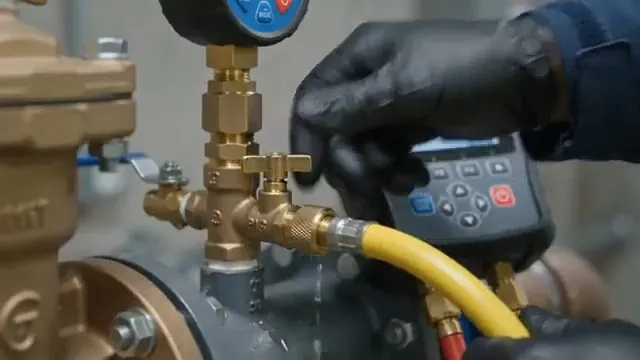
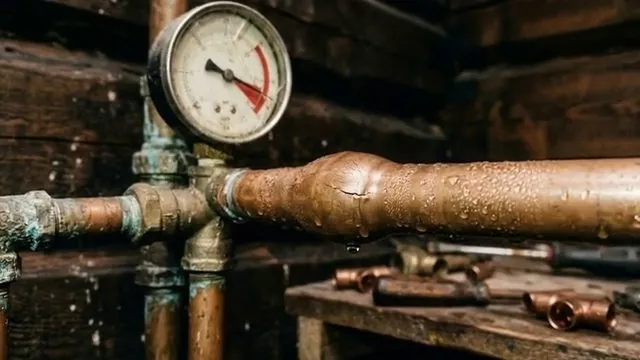
- Pressure testing of lines. A gauge on a hose bib, or a test on an isolated section, shows whether the lines hold and what pressure they carry.
No water at all: check the district, then the house valve
A total loss of water has two possible sources, and the first one is not on your property. Moulton Niguel's newsletter asks customers to check with the district about outages before calling a plumber. When the neighbors have water and you do not, look at the house valve next and make sure it is fully open. A line that has failed completely, or a closed or broken valve, is then a plumber's job.
Water line questions
My yard has a wet patch and the cold water line is not flowing. What do I do?
If water is escaping, shut the main house valve, check whether the neighbors have water, and call. A wet patch with the meter moving while the house valve is closed points to the line between the meter and the house. A plumber locates it before digging.
The shutoff valve is stuck. Can I force it?
No. An old valve can break, which turns a small problem into a flood. Turn it gently, and if it will not move, call a plumber, who can replace it. Know where the valve is before an emergency.
Is a well pressure tank part of a water line repair here?
Not usually. Homes in Aliso Viejo are supplied by a water district, so a private well and its pressure tank are not typical. If your property has one, tell the dispatcher when you call so the right plumber is sent.
Can a clogged yard drain be fixed along with a water line?
A yard drain is part of the drainage system, not the water supply. A cable or jet can clear it, and the drain cleaning information covers that work, not the water supply.
Wet patch in the yard, or pressure gone?
Call the dispatch line and describe the wet spot, the meter and the pressure. The call is routed to a plumber serving Aliso Viejo.
Call (949) 209-5456