Drain Cleaning in Aliso Viejo, CA: Slow Sinks, Backed-Up Tubs and Repeat Clogs
The first decision on a clogged drain is how far the clog reaches. One slow sink is a branch-line problem. A tub, a toilet and a kitchen sink that all back up together is a main-line problem, and the two are cleared in different ways, with different follow-up.
The sections below sort the symptoms, explain what snaking, hydro jetting and a camera look each do, and cover the point where a clog that keeps returning stops being a clog and becomes a pipe repair.
One fixture or the whole house? Find out how far the clog reaches
Run water in the fixture that is backing up, then ask a short question: is anything else slow? A single slow sink or tub usually means a clog in that fixture's own branch. Gurgling in a second drain, or water rising in a tub when the washer drains, points to the line they share. One caller described a backup that started in an upstairs bathroom and surfaced in the kitchen; that pattern means the blockage is below both.
Knowing the answer before the call helps the dispatcher describe the job, and it tells you what to expect: a branch clog is a short visit, while a shared-line clog may need a longer cable, jetting or a camera.
Clogged, slow or backed up: what each symptom usually means
| What you see | Likely location | Sensible next step |
|---|---|---|
| One sink or tub drains slowly | That fixture's trap or branch | Clear the branch; check the trap |
| Toilet will not flush and a nearby tub gurgles | Shared branch or the main line | Stop using fixtures and call |
| Several fixtures slow or backing up at once | Main line or the lateral | Stop using water, then a camera look |
| Same clog returns within weeks | A rough spot, a bellied section or roots | Camera inspection before more cleaning |
| Drain smell that cleaning does not remove | A dry trap, a vent or a failing section | Check traps and vents; camera if it persists |
If water is coming up in the lowest fixture in the house, stop running anything that drains and read the sewer backup page, because that is the lateral's job, not a branch clog.
Skip drain chemicals on a standing backup. They can splash back and are hard on a plumber who then has to work in the line, and they do not clear a blockage that is past the trap. If water is rising near electrical equipment, stop and call.
Snaking, rooter and auger: clearing a clog at the fixture or the branch
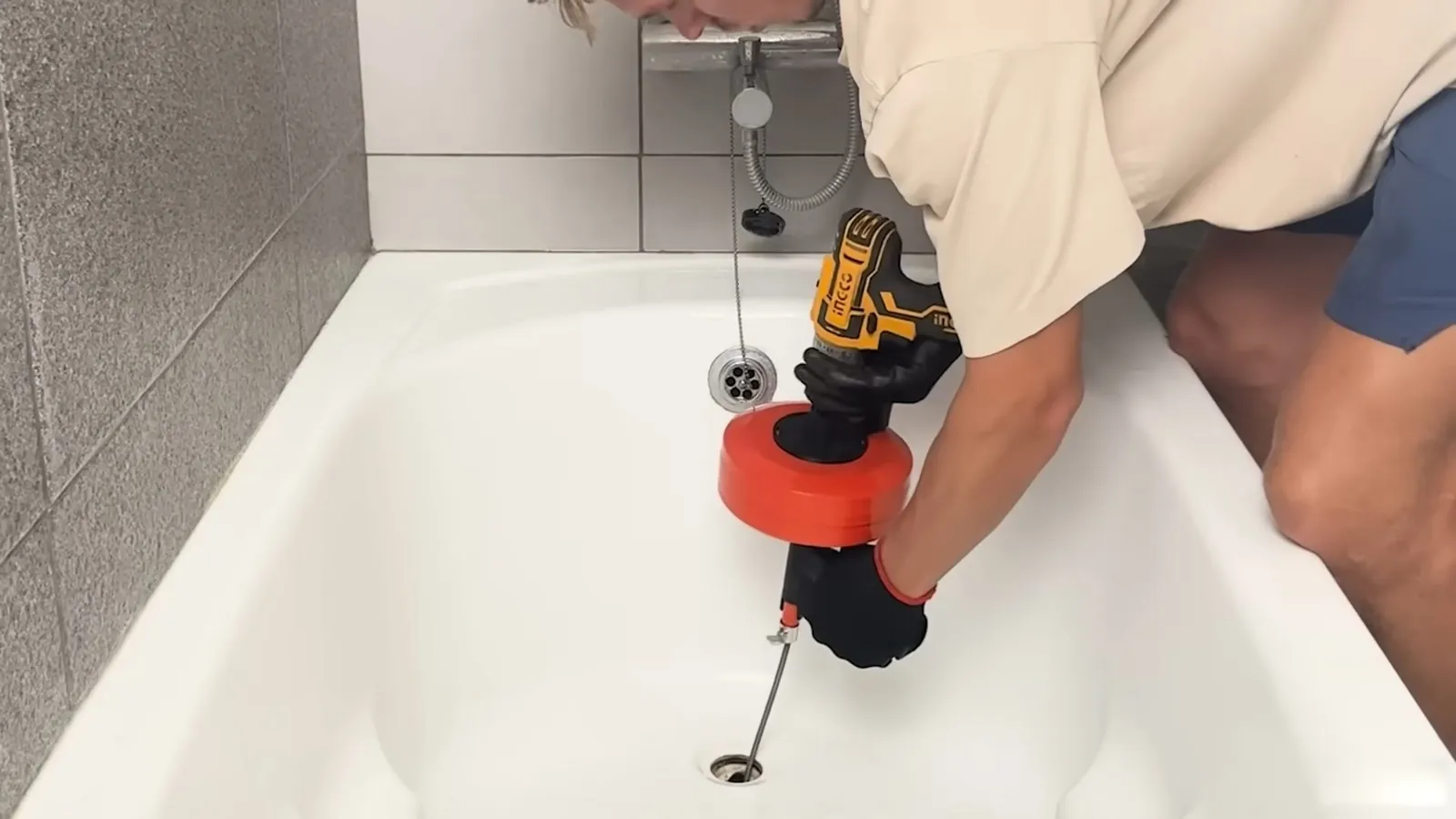
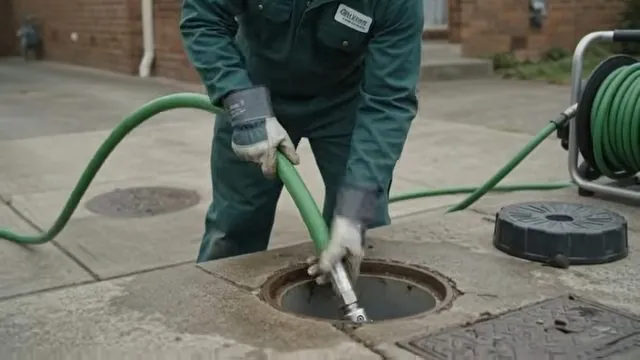
A drain cable, also called a snake, auger or rooter, is a flexible steel cable that is fed into the pipe and rotated until it breaks through or hooks the blockage. It is the standard tool for a clog in a single branch, a trap or a short run. It opens a channel; it does not scrape the whole pipe wall, so grease and scale can remain.
Ask what size cable was used and how far it ran, because a small cable on a main line clears a hole and nothing more. If the clog is gone but the line is still slow, the pipe may need jetting.
Hydro jetting: when scouring the pipe makes more sense than snaking
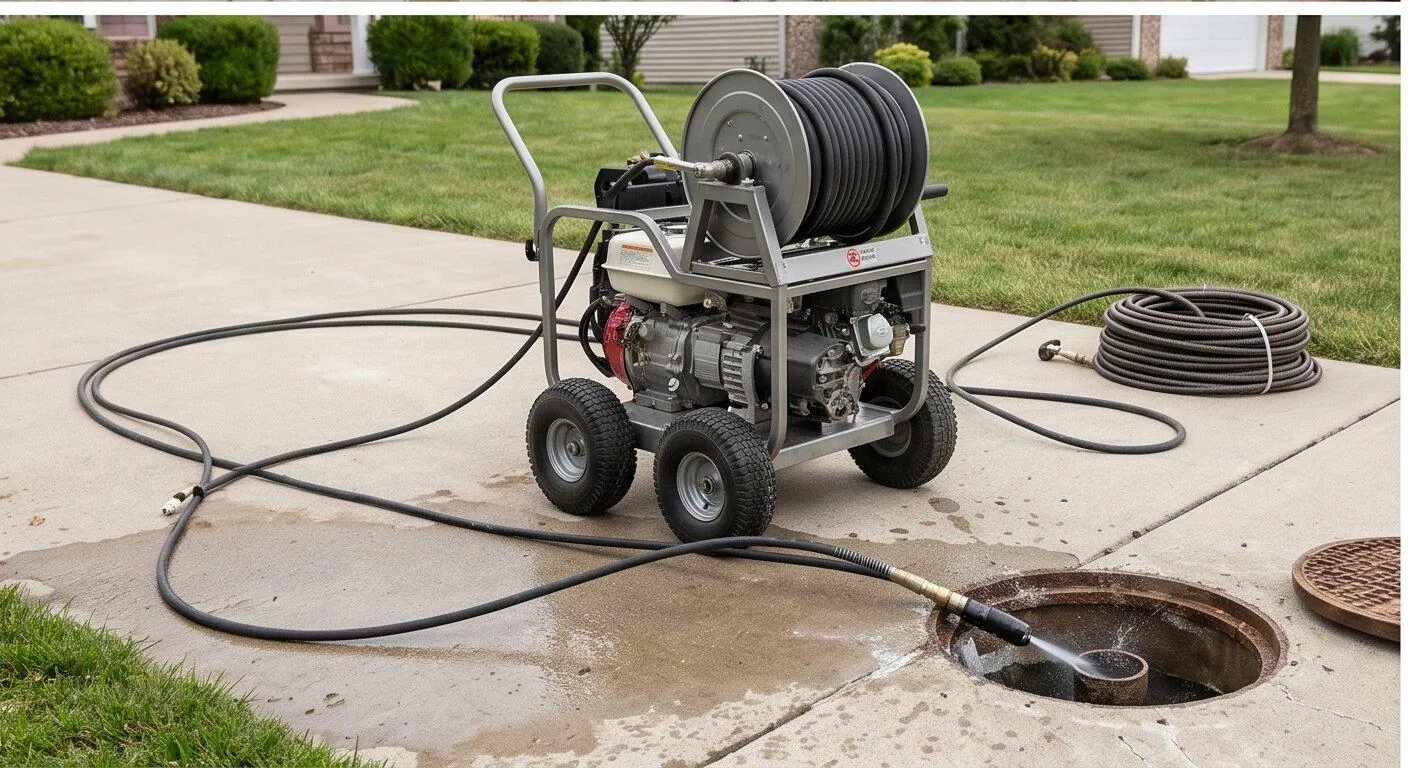
Hydro jetting sends high-pressure water through a nozzle that cleans the pipe wall as it travels. It suits grease buildup, scale and soft debris in larger lines, and it can remove roots that a cable only cuts through. It is not a first choice for every clog, and it is not suited to a pipe that is already cracked or collapsed. That is why a camera look before jetting is worth asking for. A plumber should be able to say which nozzle was used and show the result on camera afterward, which also shows whether the pipe wall is clean. Mention any past leaks or patched sections in that line before work starts, because pressurized water finds weak joints.
When a clog keeps coming back, the question becomes pipe repair
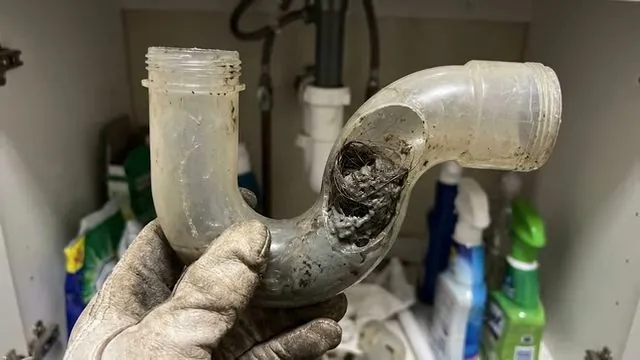
A line that clogs again and again is usually telling you something about the pipe. A bellied section holds water and debris, a joint that has shifted catches waste, and roots enter at any open seam. Older homes may have cast iron drain pipe, which roughens on the inside as it ages and can crack; whether yours does depends on how it was built, so ask the plumber what the camera shows.
Cleaning treats the symptom. When the camera shows damage, the next step is a repair of that section, and a failure in the lateral, the pipe that carries waste out to the street, belongs on the sewer line repair page instead.
Kitchen sinks, toilets and tubs: three clogs, three causes
Kitchen sink. Grease, food scraps and soap residue narrow the line over time, and a disposal that is not run with water adds to it. A kitchen sink that backs up while the disposal is off is a drain problem; one that hums and will not turn is a garbage disposal problem.
Toilet. A single toilet that will not clear after plunging usually has a clog in its own trap or the closet bend. Wipes, paper towels and toys are the usual culprits. If other fixtures gurgle when it flushes, the blockage is farther down.
Tub or shower. Hair and soap hold the most clogs. A tub that fills with shower water but drains slowly after the stopper is removed often has a hair mass at the trap, within reach of a cable.
The main line, the lateral and who owns what
Under Moulton Niguel's published standards, the customer owns the sewer lateral up to and including the connecting wye, and the main past it is the district's. A blockage anywhere between the house and the wye is therefore the homeowner's to clear. Mainline drain cleaning and snaking use a longer, heavier cable than a fixture clog needs. Ask the plumber to say where the blockage was relative to the wye and to give you a recording of the camera run. Homes on El Toro Water District service follow that district's rules.
Where the lateral rule comes from
MNWD publishes the owner's responsibility for the sewer lateral in its construction standards and a responsibility diagram.
MNWD operations pages and the construction standards it issued in January 2019. Checked October 2026.
Yard drains, French drains and what else is handled
Yard and storm drainage is a different system from the house drain. A clogged ground drain can be cleared, but a French drain or an exterior drainage system is installed for grading and runoff. Drainage system installation is excavation and grading first, and the plumber can tell you whether the work is plumbing or something else.
- Camera inspection. A small camera on a cable shows the pipe from the inside.
- Tree roots. Roots enter at joints; jetting or cutting clears them, but the entry point remains.
- Floor drains. These dry out and smell or back up; a trap that is refilled and a cleared line often solve it, while a cracked or sunken basement drain needs repair.
- Drain odors. Check traps and vents first, then the line.
- Commercial and restaurant drains. Grease interceptors and kitchen lines are on the commercial plumbing page.
Sump and ejector pumps: a separate trade question
A sump or ejector pump moves water or waste from a low point up to the drain line. When a pump fails, the symptom is a flooded pit rather than a clogged drain, and it is a separate repair from clearing the line. If a pit overflows, say so on the call so the dispatcher can tell you what kind of plumber is needed.
Drain cleaning questions
Who do I call for a clogged drain line?
A plumber who clears drains. Call the dispatch line, say which fixtures are slow and whether more than one is affected, and the call is routed to a plumber serving Aliso Viejo. A single fixture is a short branch job, and several at once point to the main line.
Why does my kitchen sink drain keep backing up?
Grease and food residue narrow the line over time, so the clog returns even after it is cleared. A camera look shows whether the pipe is narrowed, bellied or cracked, and jetting cleans a greasy line better than a cable alone.
What should I do while a drain is backing up?
Stop running water into the affected fixtures and anything else that drains, including the washer and dishwasher. If water is rising in a floor-level fixture, keep it away from electrical equipment and call. Plunging a single toilet or sink is fine; chemical drain cleaners can damage pipe and are hard on a plumber who has to work in the line afterward.
How do I tell a pipe blockage from a vent problem?
A blockage slows or stops water at the fixture. A vent problem makes drains gurgle or drain in bursts and can cause a trap to lose its water, which lets odor in. A plumber checks both with the line open.
Can a clogged ground drain in the yard be cleaned?
Usually. A cable or jet clears silt and debris from a ground drain, and a camera shows whether the pipe is intact. A drain that is crushed or has lost its slope needs repair, not cleaning.
Drain backing up right now?
Call the dispatch line and say which fixtures are affected. The call is routed to a plumber serving Aliso Viejo.
Call (949) 209-5456