Toilet Repair in Aliso Viejo, CA: Running Toilets, Dripping Faucets and Leaking Shower Valves
Almost every fixture call starts with the same decision: repair what is there, or replace it. A toilet that keeps running can need a ten-minute part or a new toilet. A faucet that drips can be a worn cartridge or a fixture that has had its day. The right answer depends on what failed, how old the fixture is and whether the parts are still made.
Fixture by fixture, the sections below take that decision for toilets, faucets, sinks, tubs and showers. It also covers the shutoff valves under them, the hard water that wears them out and the larger jobs, such as new toilets and remodel rough-in, that go beyond a repair.
Repair or replace? How to decide on a failing fixture
Parts decide it more often than price. A toilet's flapper, fill valve and flush valve are standard parts, so a running toilet is usually a repair. A faucet from a maker that no longer stocks its cartridge is a replacement, whatever the leak. Age matters too: a fixture that has needed three repairs in a few years is signaling its end. Fixtures and home plumbing systems age together, so the question is partly about the supply and drain lines each one connects to.
| Fixture | Repair usually fits when | Replacement tends to fit when |
|---|---|---|
| Toilet | The leak or the running is a flapper, fill valve or wax ring | The tank or bowl is cracked, or flushes fail after repairs |
| Faucet | A cartridge, seat or washer is worn, and parts are available | Parts are discontinued, or the body is pitted or corroded |
| Shower valve | A cartridge or trim is failing and the valve body is sound | The valve body leaks inside the wall or will not seal |
| Sink, tub or vanity | A trap, drain or supply connection is leaking | The basin is cracked or the finish has failed |
A leak that is under a sink or behind a wall is a different question from a fixture that is merely worn. If water has reached the floor or a wall, look at the meter test for hidden leaks before assuming the fixture is the only source.
If a leak is dripping onto an outlet, a light fixture or an appliance below, turn off the supply at the fixture's stop or the main valve and keep your distance; wiring is for an electrician.
Toilet repair: running, weeping at the base and clogged
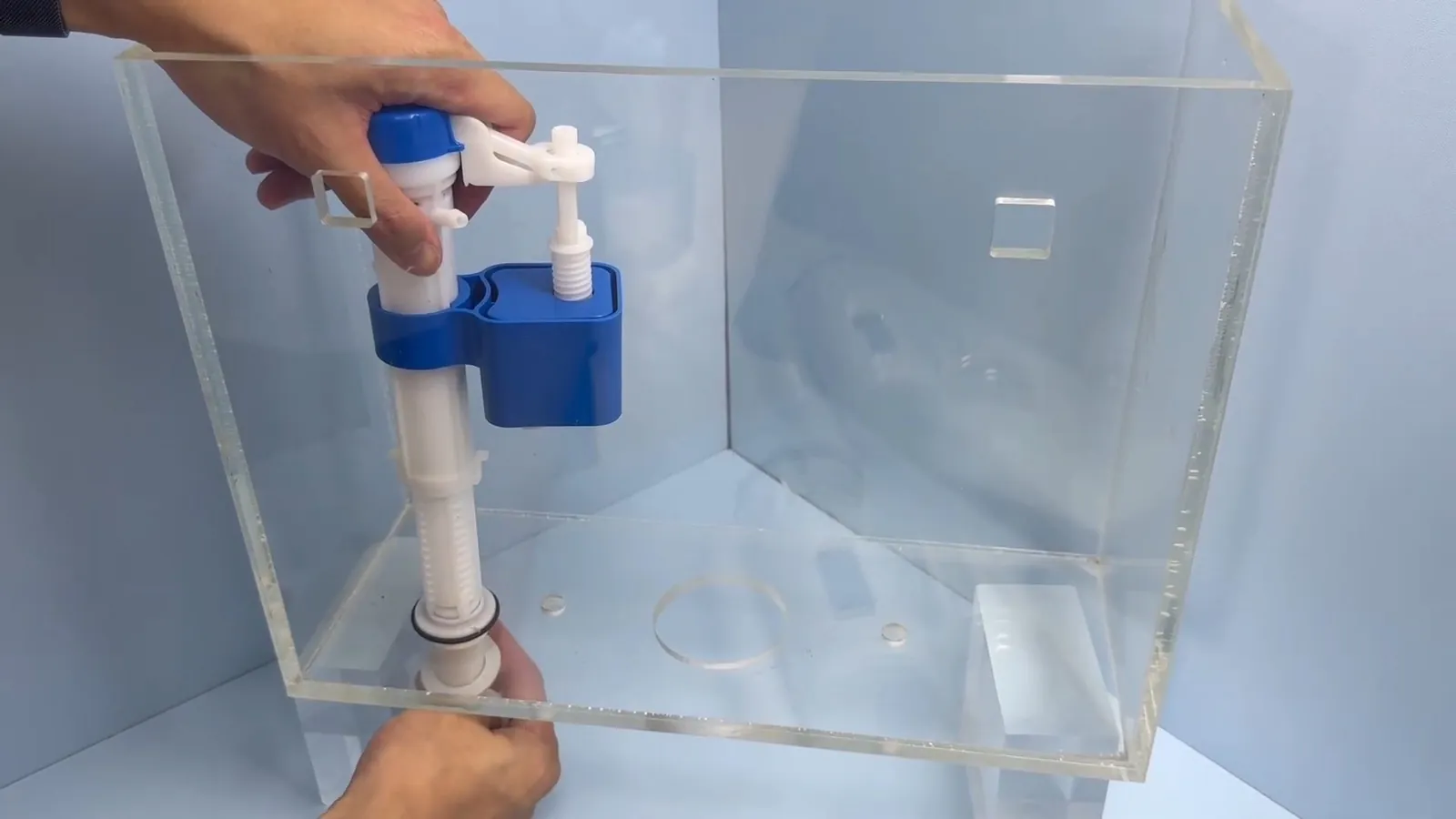
A running toilet is almost always one of three things. The flapper at the bottom of the tank has stopped sealing, the fill valve is not shutting off or the float is set too high, so water slips down the overflow tube. A toilet that refills on its own every so often, with nobody using it, has a slow leak at the flapper that drops the tank level until the fill valve kicks in. That is what callers mean when a toilet "randomly runs."
A weeping base is usually the wax ring or the closet bolts. If the floor around the base is wet after every flush, the seal has failed, and the toilet has to be lifted to replace it. Check for a loose toilet, which is the usual cause. A toilet that clogs once is a plunger problem; one that clogs again and again, with other fixtures gurgling, is a drain problem and belongs on the drain and clog service page.
- Remove the tank lid and look. Water should stop an inch or so below the overflow tube.
- Drop a little food coloring into the tank and wait. Color showing in the bowl with no flush means the flapper leaks.
- Check the supply valve. Turn it off if the toilet will not stop running, then call.
Faucet repair: drips, weak flow and leaks at the base
A faucet that drips from the spout has a worn cartridge, washer or seat. A leak at the base of the handle is usually an O-ring or a packing nut. Weak flow, on the other hand, is most often a clogged aerator, the small screen at the tip of the spout, and the cause here is often scale, which can be soaked off. A drip is not harmless. Over a month it wastes water and, below the sink, can soak a cabinet floor before anyone sees it. Note the faucet's brand and model before the call, and ask whether its cartridge is still made. A discontinued part can be hard to find, and that is the point where replacing the faucet is the better route.
Kitchen sink: leaks below, slow drains and faucets that spray
Open the cabinet under a kitchen sink and look before anything else. Water on the cabinet floor can come from the faucet's supply lines, the drain trap, the disposal or a sprayer hose, and each has a different fix. Dry everything with a towel, run the water, and watch to see where the first drop forms. A slow kitchen drain is a grease and food problem and is handled as a drain cleaning job.
Faucets that spray sideways or leak from the pull-out hose usually have a worn hose or a clogged aerator. If the kitchen sink has a disposal, the page on disposal leaks and jams covers what is specific to it.
Bathroom sink and vanity leaks
A bathroom vanity hides a lot of plumbing in a small cabinet: two supply lines, a drain, a trap and often a pop-up stopper linkage. A leak that appears only when the faucet runs points to a supply line or faucet connection. A leak that appears when the sink drains points to the trap, the pop-up or the drain flange. Tightening a slip nut by hand sometimes fixes a trap; a trap that keeps loosening has a worn washer or a cracked fitting.
Before replacing a vanity or a sink, check what the plumbing under it looks like. Old stop valves that will not close completely, and supply lines that have hardened, are cheaper to replace while the cabinet is empty than after the new fixture is in.
Bathtub and tub leaks
A tub leaks in two places that look alike. A leak that shows below the tub, in a ceiling or an adjacent room, when the tub is filled or drained points to the drain, the overflow gasket or the trap. A leak that shows only when the shower runs is more often the tub spout, the valve or the wall surround, where water gets behind the tile or caulk.
Caulk is a patch, not a fix. Re-caulking a joint that has failed buys time only if the cause was the joint and not a leaking valve behind the wall. A plumber can test the supply and the drain separately: fill the tub and check below, then run the shower and check, which tells the two sources apart without opening anything.
Shower valve, showerhead and wall leaks
A shower valve that drips from the head after it is turned off has a worn cartridge. Hot and cold that mix badly, or a handle that is stiff or loose, point to the same part. A caller who found no leak with the main shut off, and a valve that leaked when the water was on, described the typical pattern: the problem sits in the valve, behind the wall.
Replacing a cartridge is quick if the valve is accessible from the trim side. A valve body that leaks inside the wall needs the wall opened, and the question for the quote is who repairs the tile or surround afterward. A shower that has leaked behind the wall for some time has become a question for the wet drywall and mold page, not only a plumbing repair.
Toilet installation and replacement
A new toilet is a small project with a few parts that matter. The rough-in, the distance from the wall to the center of the drain, decides which toilets fit. A new wax ring or a gasket, new closet bolts and a new supply line and shutoff are part of the job. The old toilet has to be hauled away, and the floor flange has to be sound.
- The flange: whether it is cracked, loose or set at the right height for the new floor.
- The rough-in distance, so that the new toilet fits the existing drain.
- The supply stop and line, which should be replaced with the toilet.
- A leak check after the first few flushes, and again a day later.
- Whether the quote includes haul-away of the old toilet.
Toilet and sink installation is also where hidden problems show up: a rotted subfloor around the flange, a corroded drain stub or a shutoff that will not close. Ask the plumber to tell you before the toilet is lifted what they will do if they find one.
Faucet installation, supply stops and angle valves
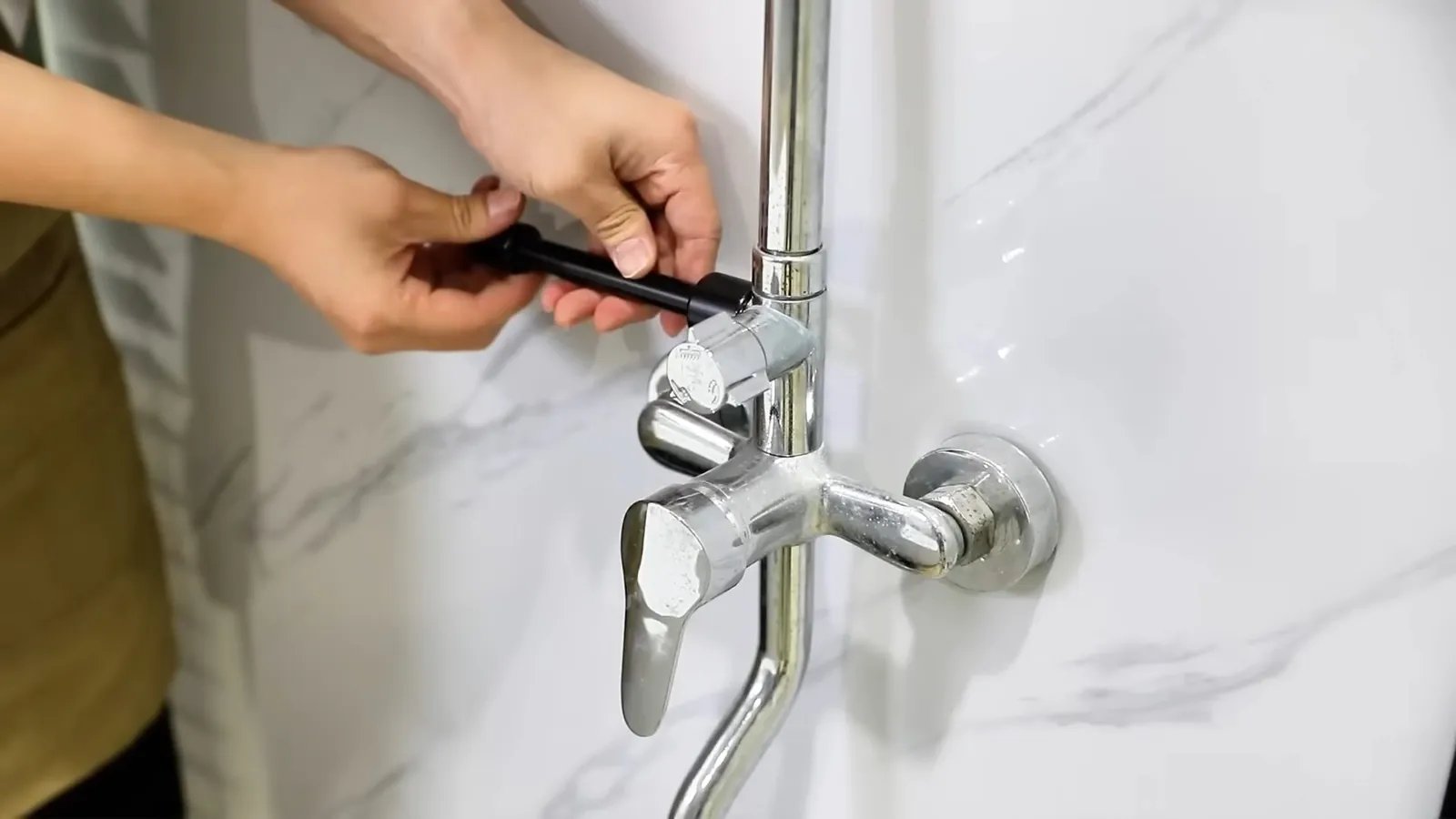
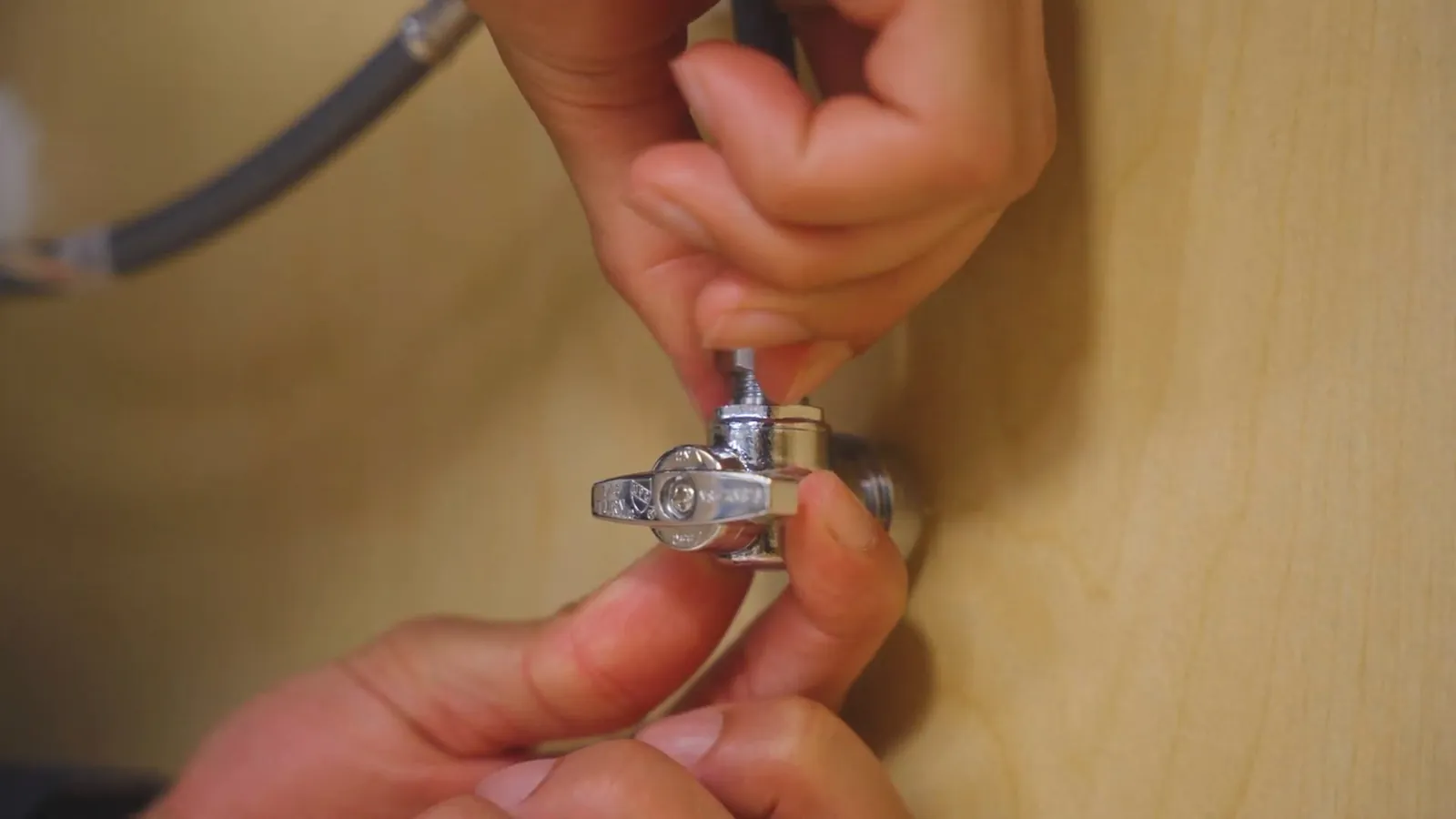
Installing a new faucet is simple when the fixture is a like-for-like swap, and less so when the new faucet needs a different number of holes or a different supply connection. The shutoff valves under a sink, called supply stops or angle valves, are the part most likely to be the problem. Old ones corrode, stick and leak when turned, and a plumber who finds one will usually recommend replacing it while the lines are disconnected.
Know where each stop is, and turn them gently once a year so that they do not seize. A stop that cannot be closed means any small leak under that fixture has to be handled at the main house valve, which affects the whole house. Outdoor faucets, called hose bibs, have their own failure: a bib that drips inside the wall from a worn stem needs a repair before the leak reaches the framing.
Hard water and the fixtures it wears out
Moulton Niguel's 2023 report has hardness averaging 13.3 grains per gallon, which counts as hard water, and scale is the likely reason aerators clog, showerheads lose their spray and cartridges stiffen. Scale on an aerator or showerhead can be soaked off in vinegar. Scale inside a cartridge shortens its life, and replacing it is the repair.
Where the 13.3 comes from
That is Moulton Niguel's 2023 average. The El Toro Water District area was not looked up, so a home on its service may differ. If scale is a constant complaint, a hardness reading at your own tap comes before any decision, and the page on softener and filtration choices explains what treatment can and cannot do.
MNWD's 2023 report, plus its operations pages. Checked October 2026.
Remodel plumbing, rough-in and specialty installs
A bathroom or kitchen remodel needs plumbing work at two stages: rough-in, before the walls are closed, and trim-out, when fixtures are set. Rough-in is where drain, vent and supply lines are placed for a new layout, and a mistake there is hard to fix once tile is down. New construction plumbing follows the same pattern on a larger scale.
- Specialty installs: an ADU bathroom, a wet bar, a laundry room, a tub-to-shower conversion, a toilet relocation or a dual-flush toilet each change the rough-in.
- Outdoor faucet or hose bib: repair or replacement of the bib and its shutoff.
- Bidet: a seat or a fixture, with a supply tee and a nearby outlet for powered models.
- Appliance hookups: washer, dishwasher and ice maker supplies and drains, including the valves and hoses.
Faucet, toilet and fixture questions
My outdoor faucet is leaking. Is that a plumbing repair?
Yes. A hose bib that drips from the handle has a worn washer or packing, and one that leaks inside the wall has a failing stem or a connection behind it. Close the shutoff for it if there is one, or the main house valve if there is not, and call.
My toilet is leaking or running. What is wrong?
A running toilet is usually a worn flapper or a fill valve that will not shut off. A toilet that leaks at the base has a failing wax ring or loose bolts. Food coloring in the tank shows a flapper leak, and a plumber can replace the part.
Why does my toilet run by itself every few minutes?
A slow leak past the flapper drops the water level in the tank until the fill valve refills it. That is the usual cause. A worn flapper or a flush valve seat that has scale on it is replaced, and the repair is short.
Why do pipes knock when a toilet finishes filling?
The sudden stop of the fill valve can send a shock through the pipes, called water hammer. A worn fill valve, high water pressure or loose pipe straps can cause it. A plumber can replace the valve, check the pressure and secure the pipes.
Toilet running, faucet dripping or a shower valve leaking?
Call the dispatch line and say which fixture it is and where the water shows. The call is routed to a plumber serving Aliso Viejo.
Call (949) 209-5456